The Complete RV Packing List (Free Printable)
DisclosureThis page contains affiliate links. If you buy through them, we may earn a commission at no extra cost to you.
Most first-time RV packing goes wrong in the same direction: too many clothes, not enough plumbing. People arrive at the campground with seven days of outfits and no water pressure regulator, which is the one item that can actually end a trip.
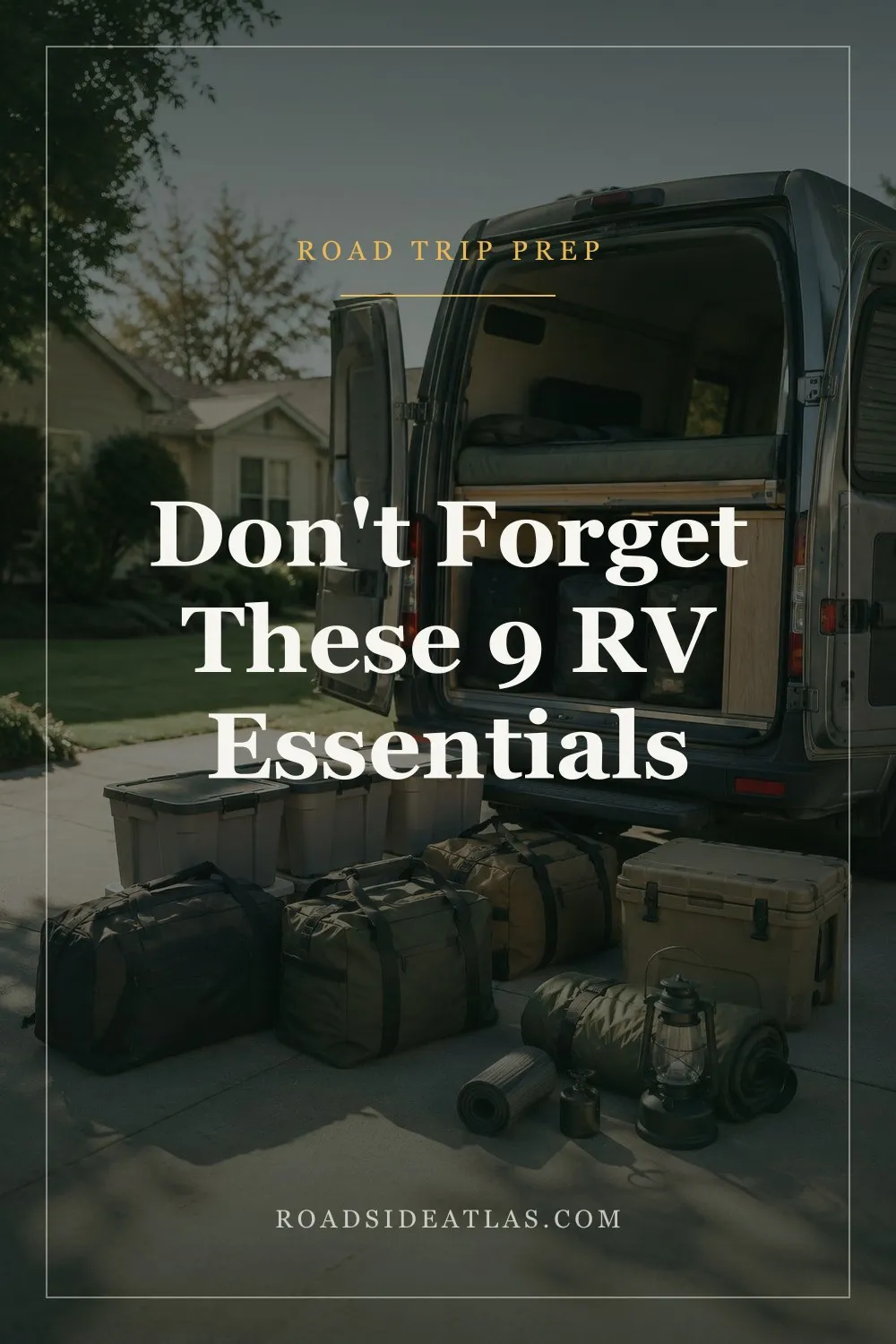
The list below is organized the way you’ll pack it, and it’s built to print. Below the list, there’s a short section on the nine items that get forgotten most — all of them RV-specific, none of them things you own already.
The nine things first-time renters actually forget
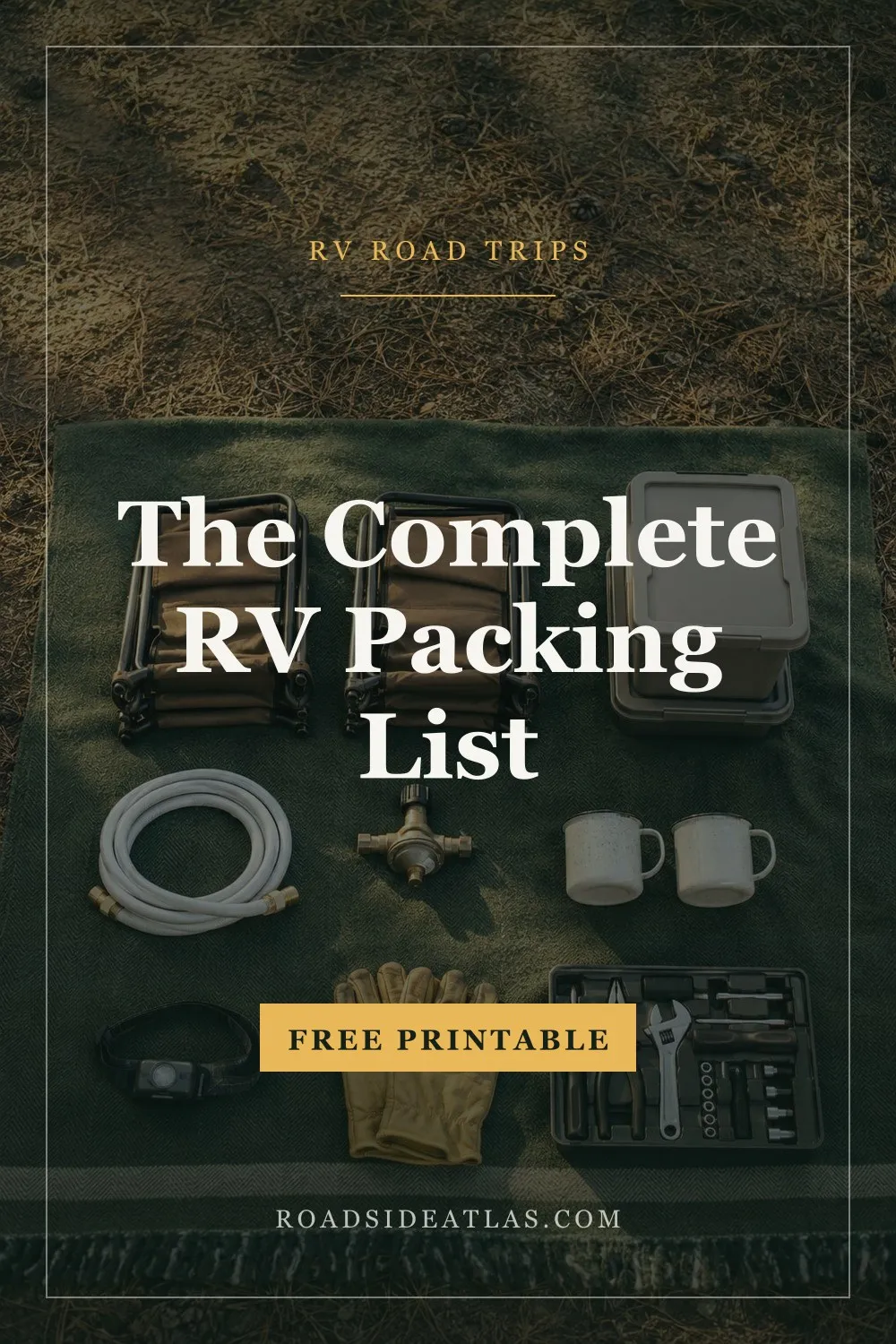
Regular camping gear is intuitive. RV-specific gear is not, because none of it exists in any other context. These are the items that are missing when someone posts “what did I forget” from a campground on their first night.
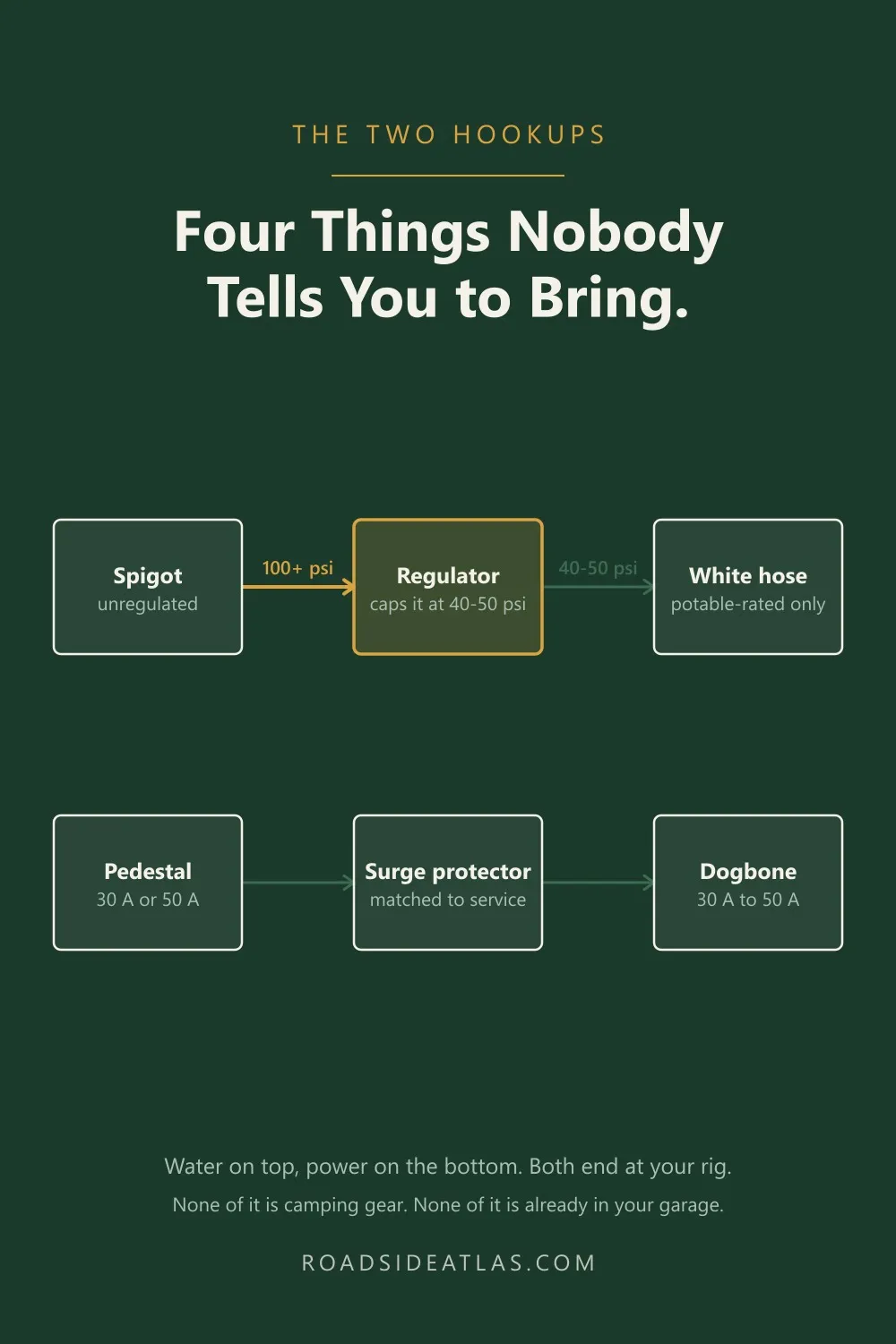
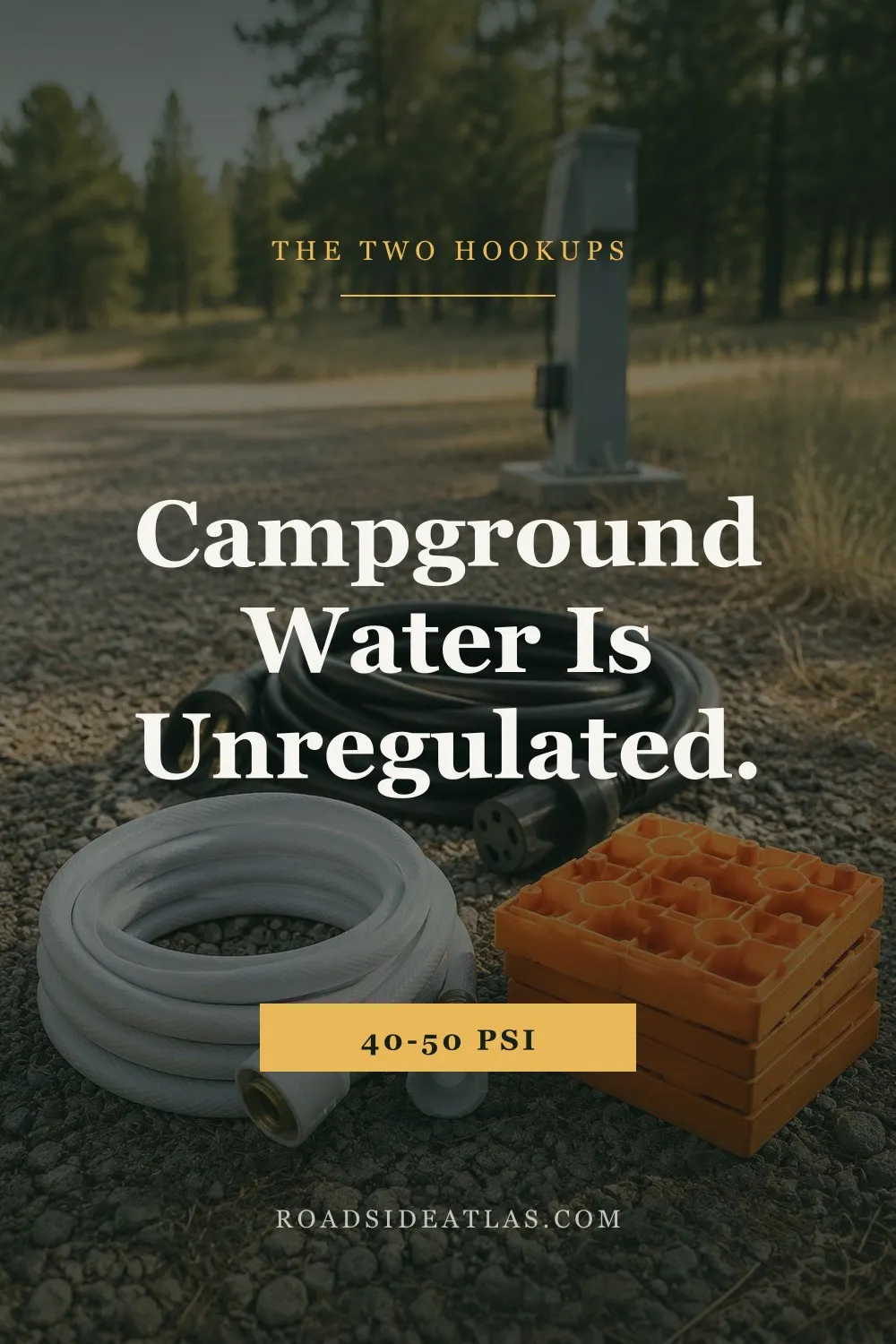
1. A water pressure regulator. Campground water pressure is unregulated and varies enormously between parks. A high-pressure hookup can rupture the plumbing inside the rig, and you will be the one paying for it. A brass inline regulator that caps flow around 40–50 psi is inexpensive and screws on between the spigot and your hose. Do not skip this one.
2. A drinking-water-safe hose. A green garden hose is not the same thing. Standard garden hoses aren’t certified for potable water and will make your tank taste like plastic. You want the white or blue hose specifically labeled for drinking water.
3. A surge protector. Campground pedestals have miswired outlets more often than you’d expect. A 30-amp or 50-amp surge protector — match it to your rig’s service — sits between the pedestal and your cord and refuses to pass power through a bad connection. This is cheap insurance against a very expensive electrical repair.
4. An electrical adapter. Sooner or later the only open site has 50-amp service and your rig is 30-amp, or the reverse. The adapter that bridges them is called a “dogbone.” Carry the ones that cover your service in both directions, plus a 15-amp household adapter for driveways.
5. Leveling blocks. Very few campsites are flat, and an RV refrigerator that runs on propane needs to be reasonably level to work correctly. Interlocking plastic blocks stack under the low-side tires. Without them you’re hunting for flat rocks in the dark.
6. Wheel chocks. These stop the rig from rolling once you’ve unhitched or parked. They also cut down the rocking motion when people move around inside, which matters more than you’d think when someone gets up at 3 a.m.
7. RV-safe toilet paper. Regular toilet paper doesn’t break down fast enough in a black tank and is a common cause of clogs. The RV-rated kind dissolves quickly. It costs almost nothing and prevents the single worst maintenance job in RVing.
8. Non-slip drawer and shelf liner. Everything inside a moving RV slides. Cabinet contents shift on every turn and land on the floor when you open the door at the campsite. A roll of rubberized liner cut to fit your shelves solves it permanently.
9. A tire pressure gauge rated for RV pressures. Car gauges typically top out around 50 psi. RV tires often run 65–110 psi depending on the rig, so a car gauge simply can’t read them. Underinflated RV tires are a leading cause of blowouts.
The printable list
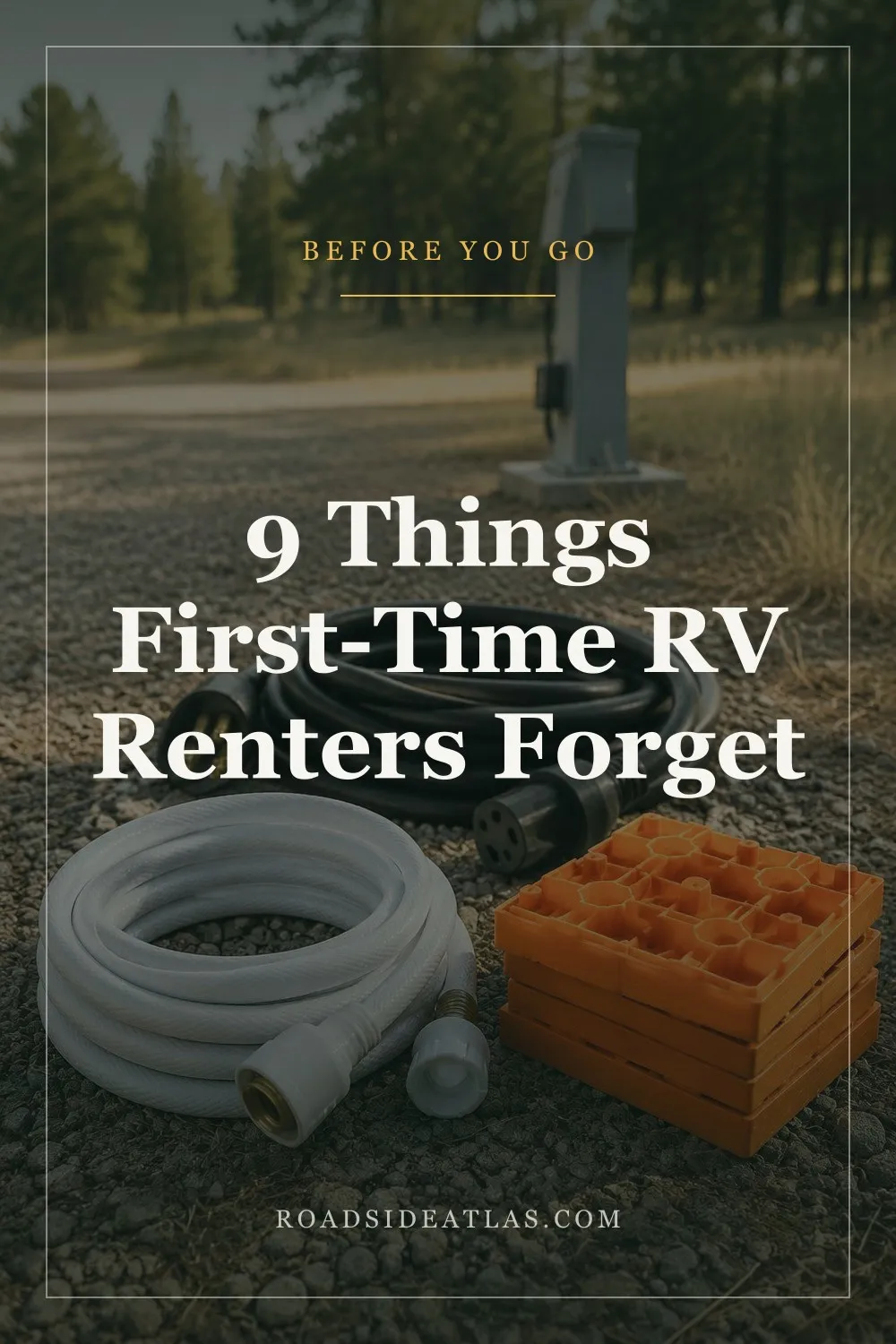
Print this before you start loading. Checking items off physically is faster than scrolling on a phone while carrying a box.
RV Packing Checklist
74 items · 8 categories
RV Packing Checklist — roadsideatlas.com
Quantities assume two adults for one week. Scale the kitchen and clothing sections to your group.
Hookups & Utilities
- Water pressure regulator (40–50 psi)
- Drinking-water-safe hose (25 ft)
- Sewer hose kit with clear elbow
- Disposable gloves (sewer use only)
- Surge protector (match 30A or 50A)
- Dogbone electrical adapters
- Heavy-gauge extension cord
- Leveling blocks
- Wheel chocks
- RV-safe toilet paper
- Black tank treatment
- Water filter (inline)
Kitchen
- Nesting pots and pans
- One good chef knife
- Cutting board
- Can and bottle opener
- Mixing bowl (doubles as serving)
- Plates, bowls, cups (melamine)
- Cutlery and cooking utensils
- Non-slip drawer liner
- Collapsible dish tub
- Dish soap, sponge, towels
- Food storage containers
- Aluminum foil and zip bags
- Oven mitt
- Coffee setup (French press travels best)
- Paper towels
- Trash bags
Bathroom & Personal
- Quick-dry towels
- Toiletries
- Shower shoes
- Prescription medications
- First aid kit
- Sunscreen
- Insect repellent
- Hand sanitizer
Clothing (per person)
- Layers — mornings are cold year-round
- Rain shell
- Closed-toe shoes
- Camp sandals
- Warm socks
- Hat
- Swimwear
Outdoor & Camp
- Camp chairs
- Outdoor mat or rug
- Headlamp per person
- Lantern
- Spare batteries
- Lighter and fire starter
- Cooler
- Small broom and dustpan
- Clothesline and clips
Tools & Emergency
- Tire pressure gauge (to 110 psi)
- Basic tool kit
- Duct tape
- Zip ties
- Work gloves
- Flashlight
- Jumper cables
- Reflective warning triangles
- Fire extinguisher (check charge)
- Spare fuses
Navigation & Documents
- Driver's license
- Rental agreement or registration
- Insurance documents
- Campground reservations (printed)
- Offline maps downloaded
- RV-aware GPS app (height and weight limits)
- Cash for camp hosts
Power & Electronics
- Portable power station (if boondocking)
- 12V charging cables
- Power strip
- Phone mount
- Headlamp charging cables
If you’re renting, check what’s already included
This list assumes you’re supplying everything. Most rentals aren’t like that, and the gap varies wildly between owners.
Peer-to-peer rentals through Outdoorsy and RVshare are listed by individual owners, so what comes with the rig is whatever that particular owner decided to include. Many include a “kitchen kit” and the hookup essentials — hose, sewer kit, leveling blocks — because they don’t want their equipment damaged by a renter who improvised. Others include nothing but the vehicle.
Message the owner before you shop and ask specifically about the utilities section above. Those items are the expensive ones to duplicate, and they’re also the ones most likely to already be in the rig. Ask about the pressure regulator and the surge protector by name — “does it come with everything for hookups” is too vague to get a useful answer.
Traditional rental fleets like Cruise America typically rent kitchen and bedding kits as add-ons rather than including them. Price those add-ons against just buying the items, especially if you expect to take more than one trip.
Do you need a portable power station?
Only if you plan to camp without hookups.
At a campground with a powered site, the rig’s converter runs everything and you don’t need anything extra. The moment you camp somewhere without a pedestal — public land, a friend’s driveway, an overnight stop in a lot — you’re living off the house battery, and a single lead-acid house battery does not last long once a furnace fan is cycling.
A portable power station is the low-commitment way to cover that gap, because you can carry it in and out of a rental without modifying anything. BLUETTI and Jackery both make units in the 1–2 kWh range that will run lights, fans, laptops, and a CPAP for a couple of nights. That capacity band is the practical starting point for most people; below roughly 500 Wh you run out faster than you expect, and above 2 kWh you’re into weight that’s annoying to move by hand.
What a portable unit will not do is run a rooftop air conditioner for any meaningful length of time. Air conditioning is the one load that genuinely requires either shore power or a much larger installed system.
What to leave at home
Storage is the binding constraint in every RV, and weight matters more than people expect — you’re driving a vehicle with a real payload limit.
Leave the extra clothes. Nearly every campground has laundry, and the layers you actually wear will be the same three items every day. Leave full-size kitchen appliances; a toaster and a blender are not worth the cabinet space. Leave glass containers, which slide and break. Leave firewood, which is regulated across state and county lines to slow the spread of invasive insects — buy it locally at or near the campground.
And leave the idea that you’ll cook elaborate meals. RV kitchens have one small burner set, one small sink, and no counter. The people who enjoy their first trip plan simple food.
Before you leave the driveway
Load the rig, then drive it around the block before the real trip. Things that are going to fall over will fall over in the first mile, and finding out in your own driveway is free.
Check that the fire extinguisher is charged, that you know where the water pump switch is, and that you can find the fuse panel. Those three take five minutes and are the ones you’ll want at an inconvenient moment.
Specifications and requirements vary by rig. Confirm tire pressures against the placard on your specific vehicle and confirm electrical service with the rental owner before buying adapters.