RV Rental Insurance: What the Waiver Actually Covers

DisclosureThis page contains affiliate links. If you buy through them, we may earn a commission at no extra cost to you.
The word insurance makes a checkout option sound simple: pay extra and transfer the risk. RV marketplace protection is more complicated. A plan may combine third-party liability insurance with a separate contractual promise about damage to the rented RV. A deposit waiver may reduce a hold or help with an eligible deductible, while leaving cleaning, tire, interior, or other charges untouched.
The only reliable answer is the current plan and policy attached to the exact listing, state, vehicle, and dates. This guide explains what to look for on Outdoorsy and RVshare; it is not legal or insurance advice and it cannot replace the policy wording.
Separate the four parts
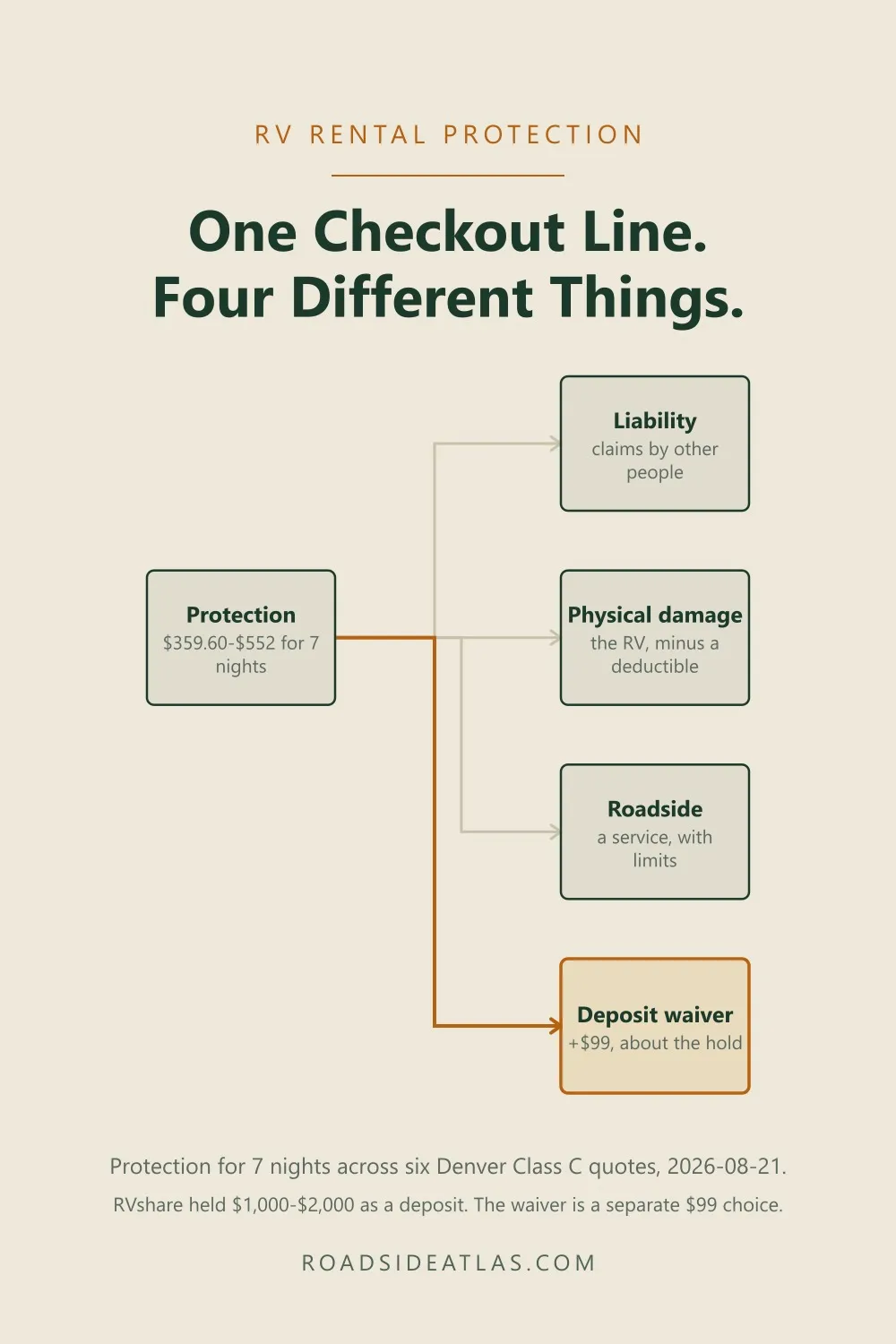
In the six Denver Class C quotes from our Outdoorsy and RVshare comparison, the protection line alone was $359.60 to $552 for seven nights. RVshare also held a refundable $1,000 or $2,000 deposit on the listings that showed one, and offered a separate $99 deposit waiver. Those are four different things sold on one checkout page.
Liability to other people
Liability coverage addresses certain claims by other people for bodily injury or property damage arising from the use of the RV. Limits, covered drivers, territory, and exclusions matter. A liability limit is not a repair budget for the rented RV, and it does not necessarily cover your own belongings or injuries.
Physical damage to the rented vehicle
Collision and comprehensive coverage may address eligible sudden damage to the RV, subject to the policy, investigation, deductible, limits, and exclusions. The renter may still owe a deductible and may be responsible for damage that falls outside the plan. Check whether the plan is insurance issued by an insurer or a platform’s contractual damage arrangement; the terms can distinguish them.
Roadside assistance
Roadside assistance is a service benefit, not a synonym for insurance. Confirm what it dispatches, whether towing or labor has dollar limits, and who pays for parts, tires, or a service call that is not included.
Security deposit or deposit waiver
A refundable deposit is money held under the rental terms. A waiver is a separate paid option that may replace some or all of that hold or cover eligible amounts up to a stated cap. It does not automatically expand what the protection plan covers.
What the platforms say today
Outdoorsy’s current U.S. help pages describe tiered guest packages with deductibles that vary by package and vehicle class. Its terms say the physical-damage deductible is applied per loss, so separate incidents can mean separate deductibles. Coverage also depends on an eligible booking, verified drivers, and the claim conditions in the applicable terms. See Outdoorsy’s guest coverage overview and Protection Package Terms.
RVshare’s public Protection Plan comparison lists plan-specific deductible and benefit differences. Its terms amendment distinguishes insurance underwritten by an insurer from the platform’s contractual physical-damage reimbursement. Those are not interchangeable legal promises, so read the plan selected for your reservation and the linked policy rather than relying on the summary table alone.
The terms and available options can change by date, state, vehicle, and listing. The details above describe the current published pages checked for this draft on September 15, 2026; the booking page and policy attached to your reservation are the documents that control.
The deposit waiver is not a blanket damage waiver
Both marketplaces describe deposit-waiver products that are limited by eligibility, caps, and exclusions. Outdoorsy’s guest help page describes a waiver that can cover an eligible protection-plan deductible, while excluding items such as interior damage, tire damage, and extra cleaning from that benefit. RVshare’s renter page likewise says its deposit waiver applies to eligible damage toward the plan deductible and lists excluded charges and events.
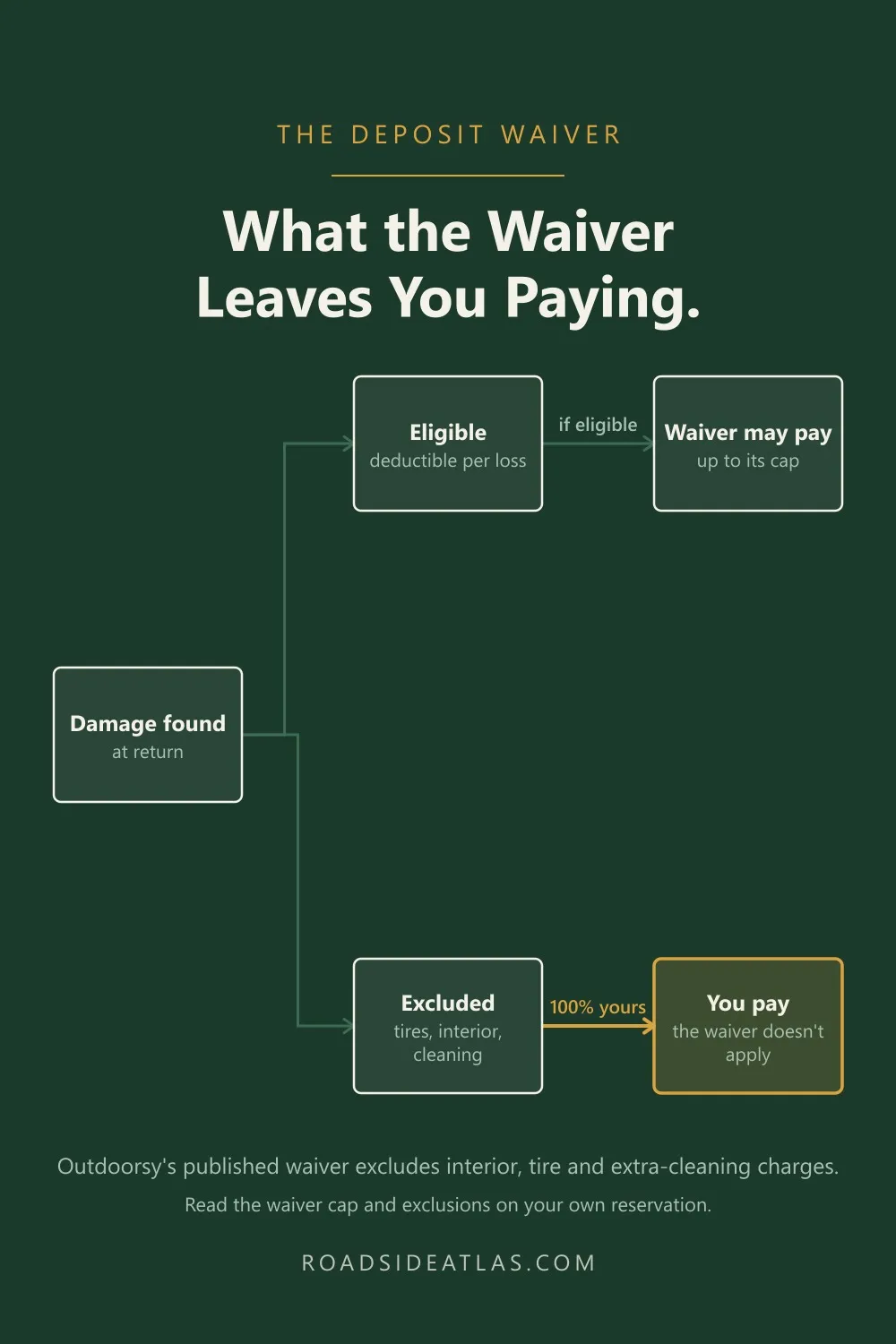
That means “deposit waiver” does not necessarily mean “I owe nothing if anything happens.” Ask these questions before choosing it:
- Does the option replace a refundable authorization, or is it a non-refundable fee?
- What is the maximum amount it can apply to, and is the cap different for this class of RV?
- Does it cover only an eligible protection-plan deductible, or any other charges?
- What remains payable for tires, awnings, interior damage, cleaning, late return, fuel, tanks, or unauthorized drivers?
- Does the owner offer the option on this listing, and is it selected in the checkout total?
Read Outdoorsy’s deposit waiver explanation and RVshare’s renter waiver page for the published scope, then compare against the reservation terms.
Check the exclusions that create expensive surprises
Do not stop at a “covered” list. Look for exclusions and conditions that match your trip:
- Driver eligibility: every person who may drive must meet the age, license, and platform-verification requirements and appear as an approved driver where required.
- Trip territory: a trip crossing a border can change or void coverage. Check every state and country on the route.
- Use restrictions: festivals, off-road use, unauthorized towing, or commercial use may be excluded or carry special deductibles.
- Damage type: tire blowouts, awning damage, roof strikes, interior stains, mechanical breakdown, and gradual wear may be handled differently from collision damage.
- Timing: coverage may begin and end at defined handoff times. Damage outside that window may not qualify.
- Reporting: a claim can require prompt notice, police reports for theft or injury, cooperation, and photos or forms inside the platform app.
- Deductible basis: determine whether the deductible applies per incident, per trip, or another way. Outdoorsy’s published terms say per loss.
These categories are a checklist, not a universal statement that a particular loss is excluded. The policy wording and claims determination decide.
Your own policy and card benefits
Call your auto insurer before booking and give them the vehicle type, rental platform, dates, and trip geography. Ask whether your policy extends liability to a rented motorhome or towable RV, whether it covers physical damage to that vehicle, and whether you need an endorsement or binder. Ask for written confirmation.
If you are considering a credit-card rental benefit, read its covered-vehicle definitions. Many benefits are designed around passenger cars and may exclude motorhomes, trailers, or peer-to-peer rentals. Do not decline a platform plan based on a generic card-benefit summary.
Preserve evidence at pickup and return
The claim process starts before the drive. Use the platform’s required digital departure and return forms. Photograph the exterior, roof edges where safely visible, windshield, wheels, interior surfaces, mileage, fuel, tank levels, and generator-hour meter. Make sure pre-existing damage appears on the signed record. At return, repeat the photos before handing back the keys.
Our pickup inspection checklist gives you a walk-through order. Keep the host’s written instructions and emergency contact details with the reservation. If an incident occurs, prioritize safety, contact emergency services when needed, notify the platform and host promptly, and follow the claims instructions. Do not make repairs or admit liability on behalf of another party without understanding the process.
A side-by-side checkout comparison
For each listing, record the following in one table before booking:
| Item | Listing A | Listing B |
|---|---|---|
| Protection package name and price | ||
| Liability limit and covered drivers | ||
| Physical-damage deductible | ||
| Per-loss or per-trip deductible | ||
| Security deposit or waiver fee and cap | ||
| Roadside assistance scope | ||
| Relevant exclusions for your route and use | ||
| Required forms, photos, and claim deadline |
Then compare the maximum amount you could have to pay in a covered incident with the cost of the waiver, and separately consider charges the waiver does not cover. A lower deductible is useful only when the loss qualifies; it does not eliminate the need to inspect, document, and follow the rental terms.
The decision rule
Choose a package only after you can state, in plain language, who is insured, what property is covered, the deductible and its basis, the waiver cap, and the important exclusions. If any one of those is unclear, ask the platform or insurer in writing before checkout.
The protection option is one part of the trip budget alongside the fees, mileage, and generator charges. Our rental cost comparison shows why the full breakdown matters more than the nightly rate. Read the actual documents for your reservation, save them, and make the trip choice with the remaining risk visible.