The Mistakes That Ruin a First RV Rental
DisclosureThis page contains affiliate links. If you buy through them, we may earn a commission at no extra cost to you.
An RV rental can look straightforward on the search page: choose a rig, choose dates, and multiply the nightly rate by the number of nights. That number is only the beginning. The expensive first-trip mistakes usually happen because a renter makes a decision before checking the fees, route, handoff, or equipment that the listing does not put in the headline.
Here are the problems worth preventing before you book, plus a checklist for the day you collect the vehicle.
1. Booking from the nightly rate
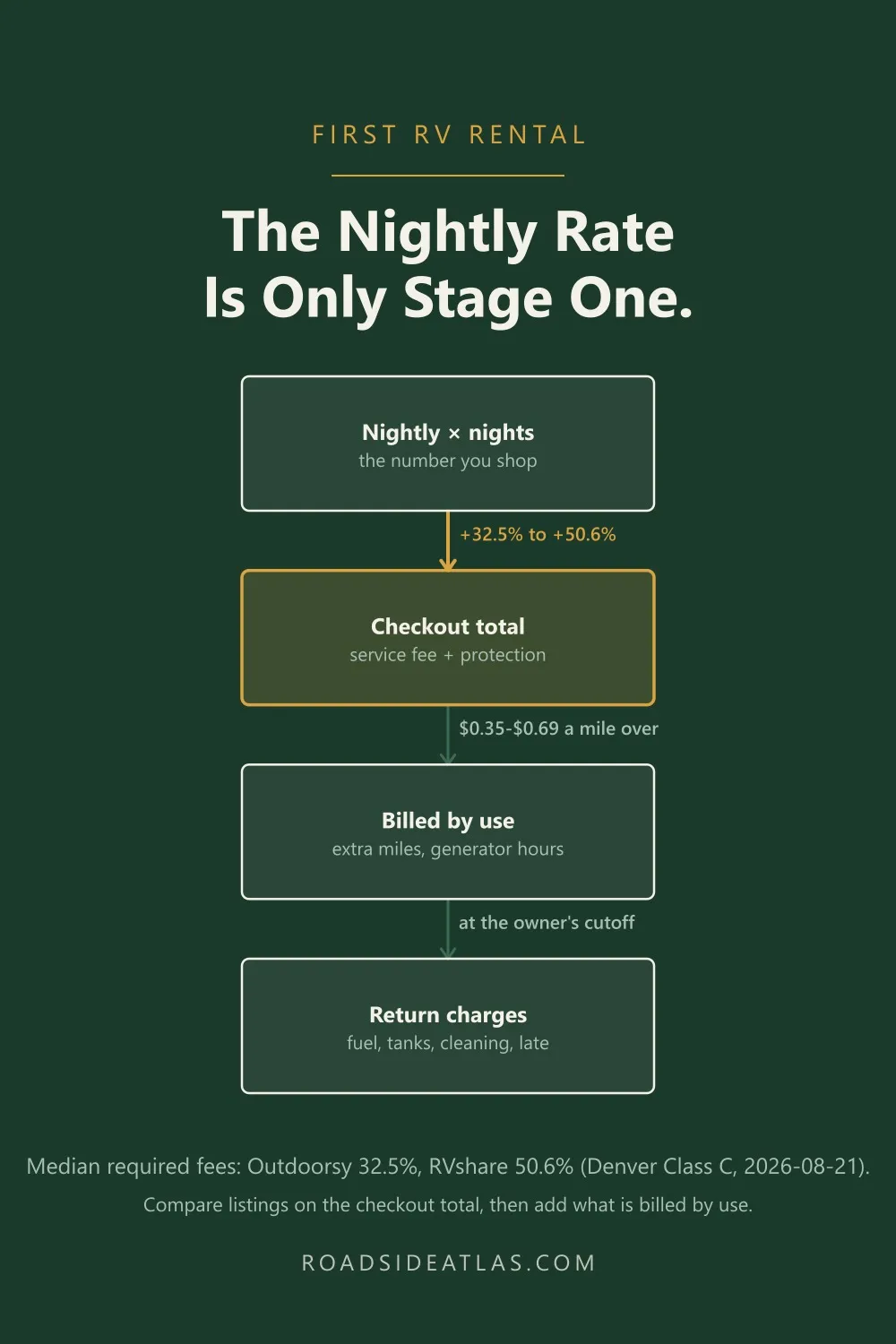
The nightly price does not include every cost. Depending on the listing, the checkout total may add platform fees, a protection package, owner fees, delivery, taxes, or an optional deposit product. Mileage and generator use may be charged later rather than included in that total.
On our six-quote comparison of Outdoorsy and RVshare, the displayed totals were not a reliable substitute for reading each line. The quotes were for one Denver trip in August 2026, so their dollar amounts should not be treated as a forecast for your dates. Across those quotes, required fees added a median 32.5% to the nightly rate times nights on Outdoorsy and 50.6% on RVshare, and listings with a mileage cap charged $0.35 to $0.69 for each mile over it. The durable lesson is to compare the final booking breakdown for the same dates and guest count.
Before paying, write down the total due now, refundable deposit or hold, included miles, mileage overage, included generator hours, and any per-day or cleaning charges. Then estimate your actual driving distance from a map route, with a little room for campground errands and detours.
2. Assuming your auto policy covers the RV
Do not infer coverage from the fact that you own a car or carry an auto policy. A rented motorhome, towable trailer, personal belongings, roadside assistance, and liability to another person may be treated differently. Call your insurer with the vehicle type, rental dates, and platform, and ask for the answer in writing.
Then read the protection option attached to the specific listing. The platform’s protection plan, liability insurance, physical-damage coverage, and security-deposit choice are not interchangeable. Our RV rental insurance guide explains what to compare.
3. Choosing a rig without checking where it can go
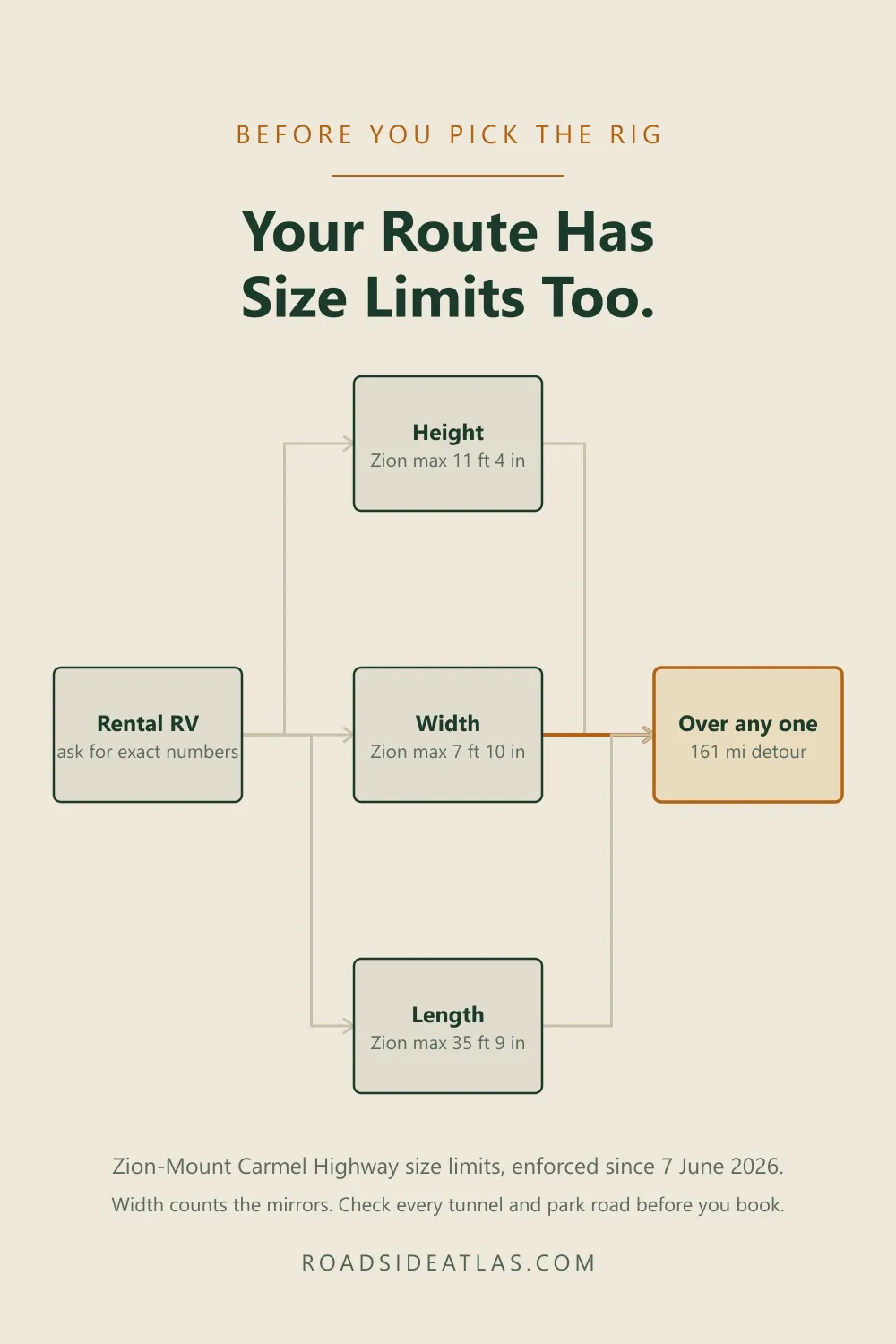
An RV is wider, taller, and longer than a car. A route that is fine for your personal vehicle can include a low bridge, weight limit, steep grade, tight fuel station, or a road that prohibits larger vehicles. Phone navigation can also route a motorhome along roads that are technically open but unpleasant or unsuitable.
Record the rental’s exact length, height, width, and weight from the owner. Check those against park, tunnel, campground, and road restrictions on your route. If the trip includes a national park or scenic byway, check the managing agency’s current vehicle rules rather than relying on an old blog post.
Do not plan every day around the maximum miles you could theoretically drive. A larger vehicle takes longer to fuel, park, and set up. Include arrival time before dark, especially on the first night when hookups and leveling are still new.
4. Skipping the handoff because the host seems helpful
Friendly explanations are not a substitute for a shared record. Before leaving, walk around the entire rig and photograph existing scratches, windshield chips, tires, roofline where visible, and interior wear. Record tank and fuel levels, generator hours, mileage, and any included accessories. Ask the host to note anything you find on the platform’s departure form.
Then have the host demonstrate the specific systems you will use: leveling, shore power, freshwater hookup, wastewater valves, water heater, furnace, generator, awning, and emergency shutoffs. If the rig has a slide-out, ask what must be clear before extending it. Our RV pickup inspection checklist is designed for this walk-through.
Keep the departure photos and signed digital forms in the rental app if the platform requires them. Do not rely on a text message or a photo roll with no timestamps when the platform’s claims process requires in-app documentation.
5. Driving away without practicing
Ask for a short supervised test before the trip begins. Adjust the mirrors, learn the backup camera, test the brakes at low speed, and practice a wide turn in a safe area. Confirm how to handle crosswinds and what to do if a tire warning appears. If you are towing, verify the hitch, safety chains, breakaway cable, lights, and controller before departure.
Make sure every driver is approved by the platform and owner. Do not assume a partner or friend is covered simply because they have a license. Check age and verification rules in the booking terms.
6. Packing gear that is wrong for RVs
Household gear does not always translate to an RV. A garden hose may not be potable-water safe; a household toilet product may not be suitable for the black-water system; and a passenger-car tire gauge may not read the pressure specified for a heavy RV tire. The rig’s manuals and host instructions control.
Ask what the host supplies, then bring only what is missing. Our RV packing list covers the items first-time renters often forget, including water-pressure protection and hookup adapters. Confirm connector types and pressure instructions for your exact vehicle instead of buying a generic kit blindly.
7. Treating the water and waste system like a house
Fresh water, gray water, and black water are separate systems. Confirm how to connect city water, how the onboard pump works, where the tank monitor is, and how to dump each tank. Ask whether the host expects tanks returned empty and whether the listing charges a dumping fee.
Never leave a black-tank valve open while connected to a sewer hookup unless the owner’s instructions explicitly say otherwise. Solids can remain behind while liquid drains, creating a blockage. Our plain-language water-system guide explains the three tanks and the common hookup mistakes.
8. Leaving no time for setup or return
The first campsite setup takes longer than the practiced version. Check the campground’s check-in window, site dimensions, hookups, and whether the site is back-in or pull-through. At return, allow time to refuel, empty tanks if required, remove trash, retract equipment, and complete the return inspection before the owner’s cutoff.
Read late-return, cleaning, fuel, propane, and dumping charges before departure. An itinerary with no buffer can turn a minor delay into an avoidable fee.
The pre-book checklist
- Compare the checkout total for identical dates and guest count.
- Confirm miles, generator hours, delivery, and return requirements.
- Verify insurance and protection choices for this listing and each driver.
- Check vehicle dimensions against the route and campsite.
- Ask which supplies are included and which connectors the rig uses.
- Schedule enough time for both the pickup inspection and return process.
For a first trip, a shorter route with a nearby first campsite is a better test than a packed itinerary. Book the RV that fits the route and your comfort level, not the one with the lowest nightly number. If you compare several listings, use the final cost and the handoff requirements as the decision points.